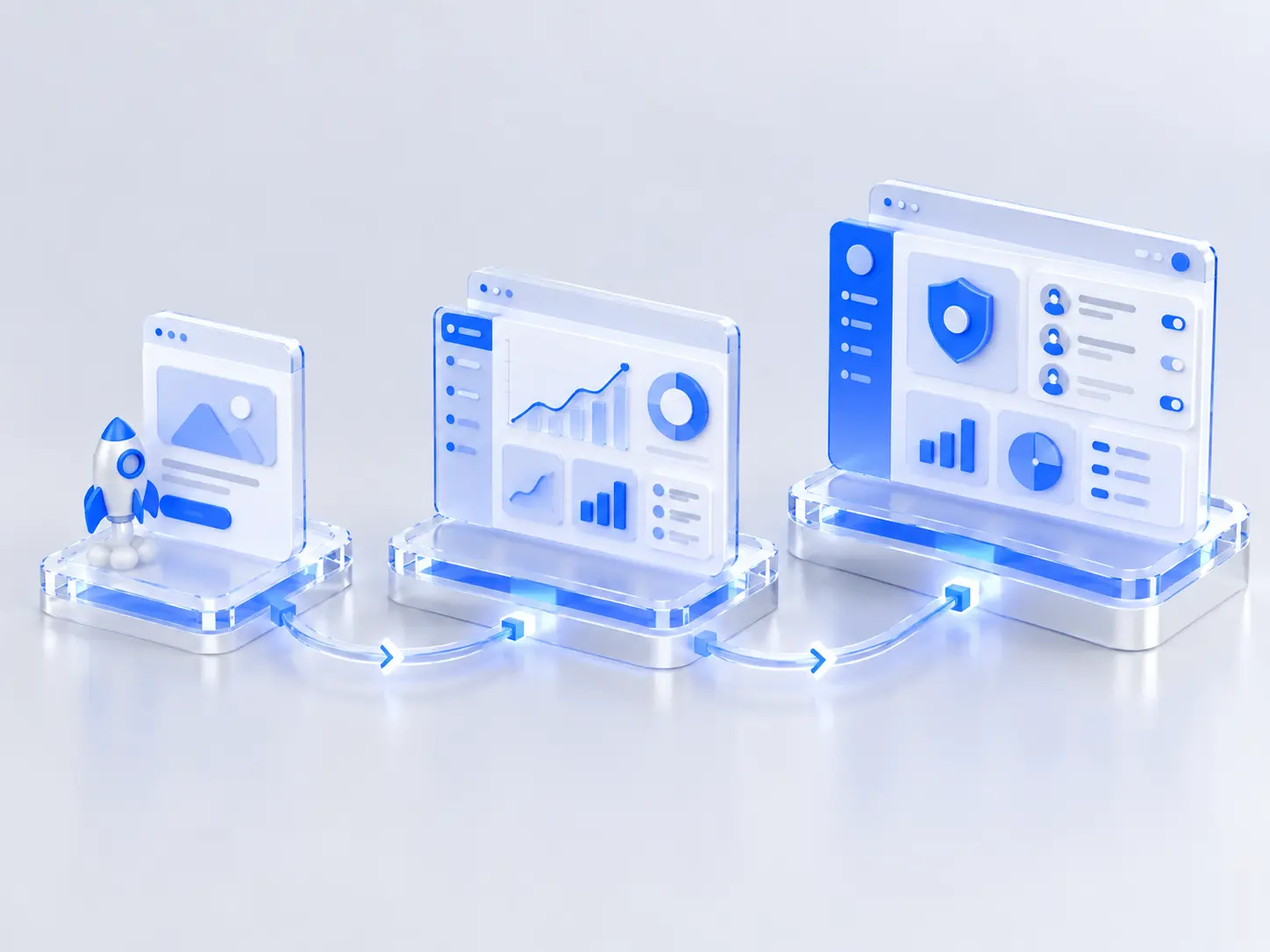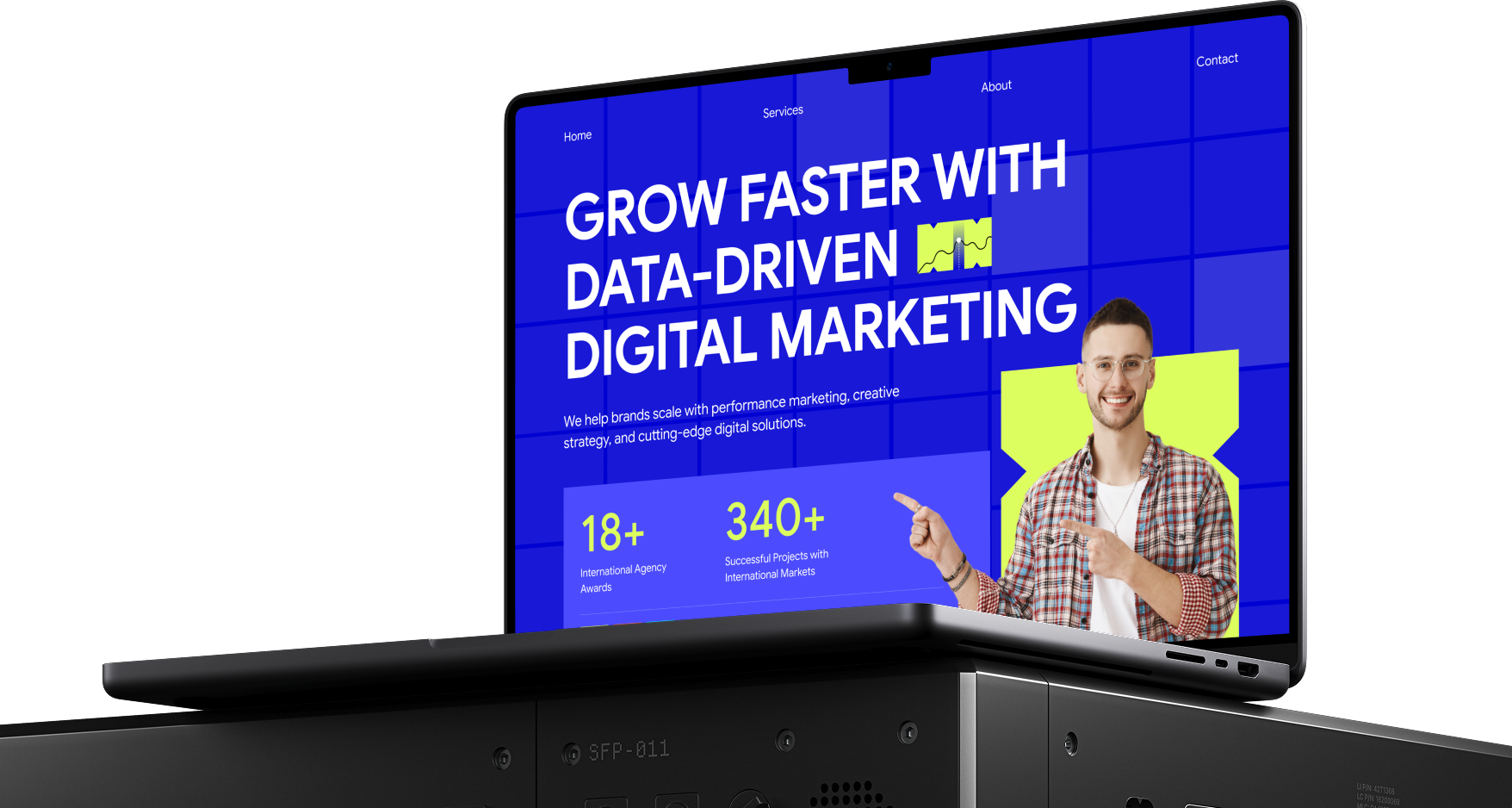
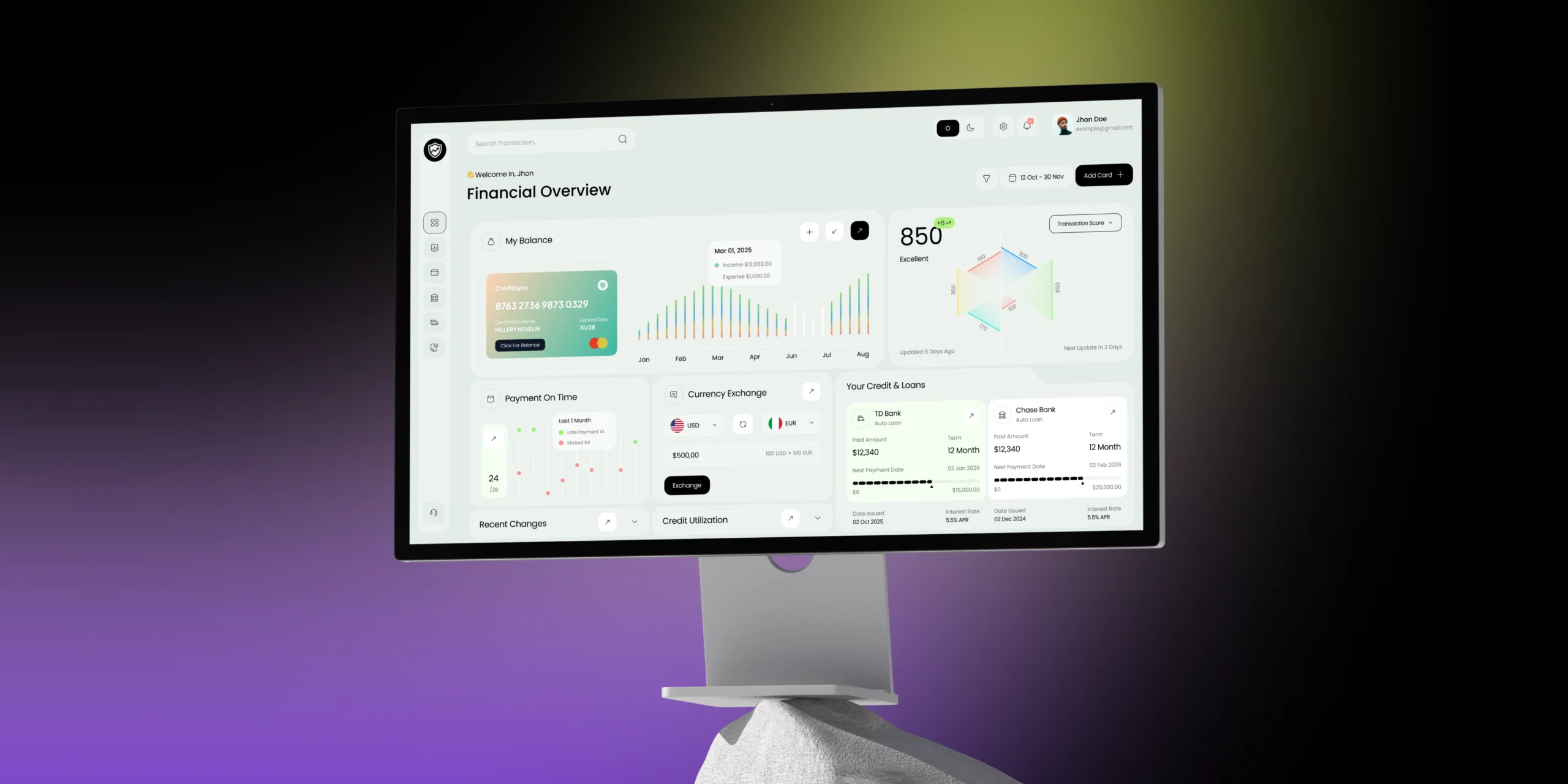
A founder emails five SaaS design agencies with the same brief, “we need help with our design.” Four of them quote a website redesign. One asks what her activation rate is. That fifth agency was the only one who understood the question, and she almost didn’t reply to them, because their quote was three times higher than the others.
That gap is the whole problem. The word “design” covers two completely different jobs in SaaS: the website that sells your product, and the product itself. Most founders hire for one while needing the other, and they only find out after the invoice clears.
This guide is not a ranked list. Every list you have read on this topic includes its own author somewhere near the top, which tells you exactly how much to trust the ranking. What follows is the framework a senior product designer would walk you through before you spend real money: what you are actually buying, whether you need an agency at all, and how to read a SaaS design agency well enough to pick the right one yourself.
Key takeaways
- SaaS design splits into two separate jobs: product UI and the marketing website. They need different partners, different budgets, and different success metrics.
- Engagement models range from subscription ($2,000 to $6,000 per month) to project-based ($15,000 to $200,000 and up).
- The single best portfolio signal is product reasoning, not visual polish.
- Your stage decides your partner. Pre-seed needs speed. Series A needs metrics. Scale needs systems.
- If your problem is product strategy, a design agency will not solve it.
The two jobs nobody separates
Here is the confusion that costs founders the most money, and almost no one names it clearly. “Design” in SaaS is two different jobs with two different buyers.
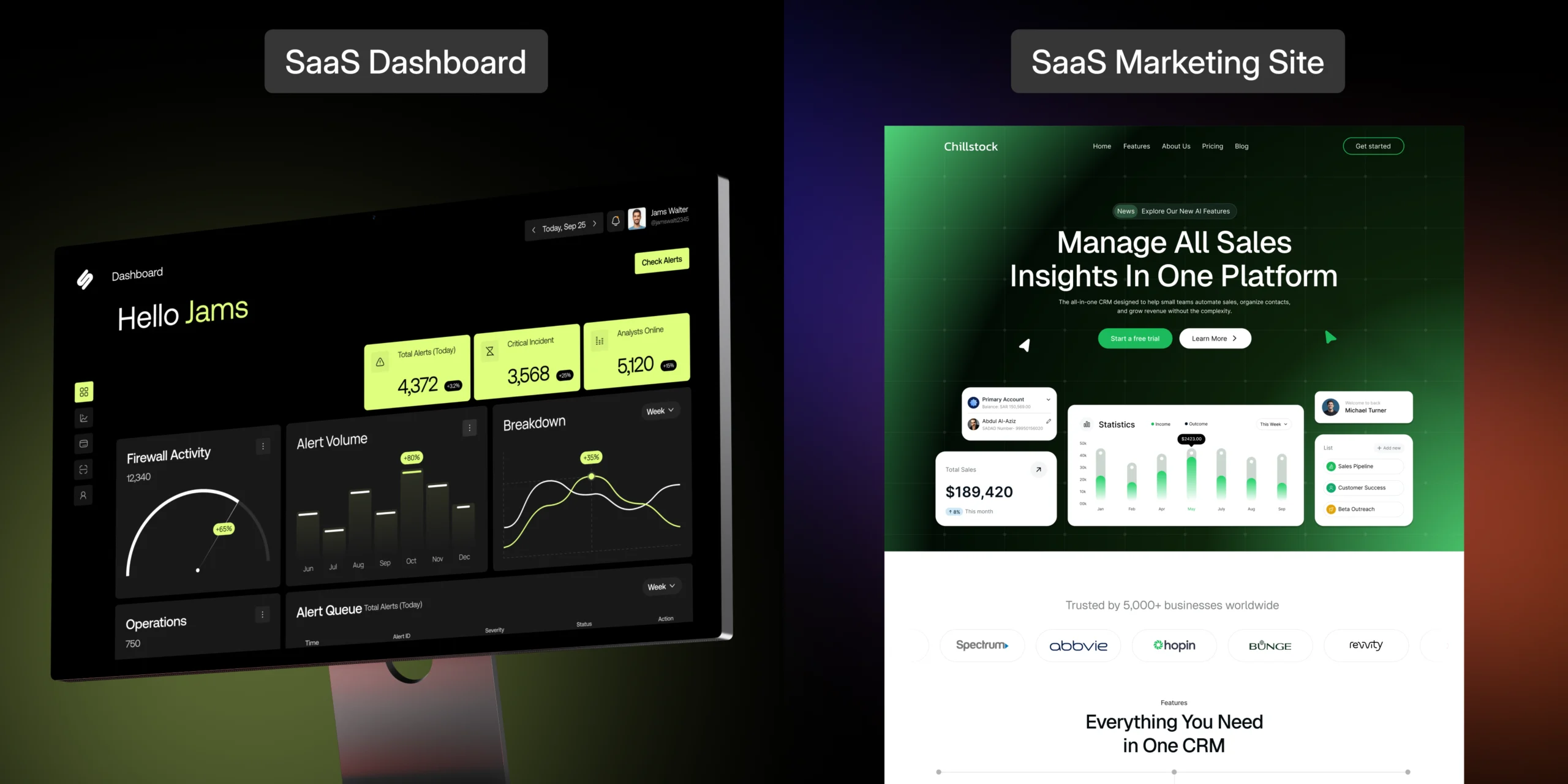
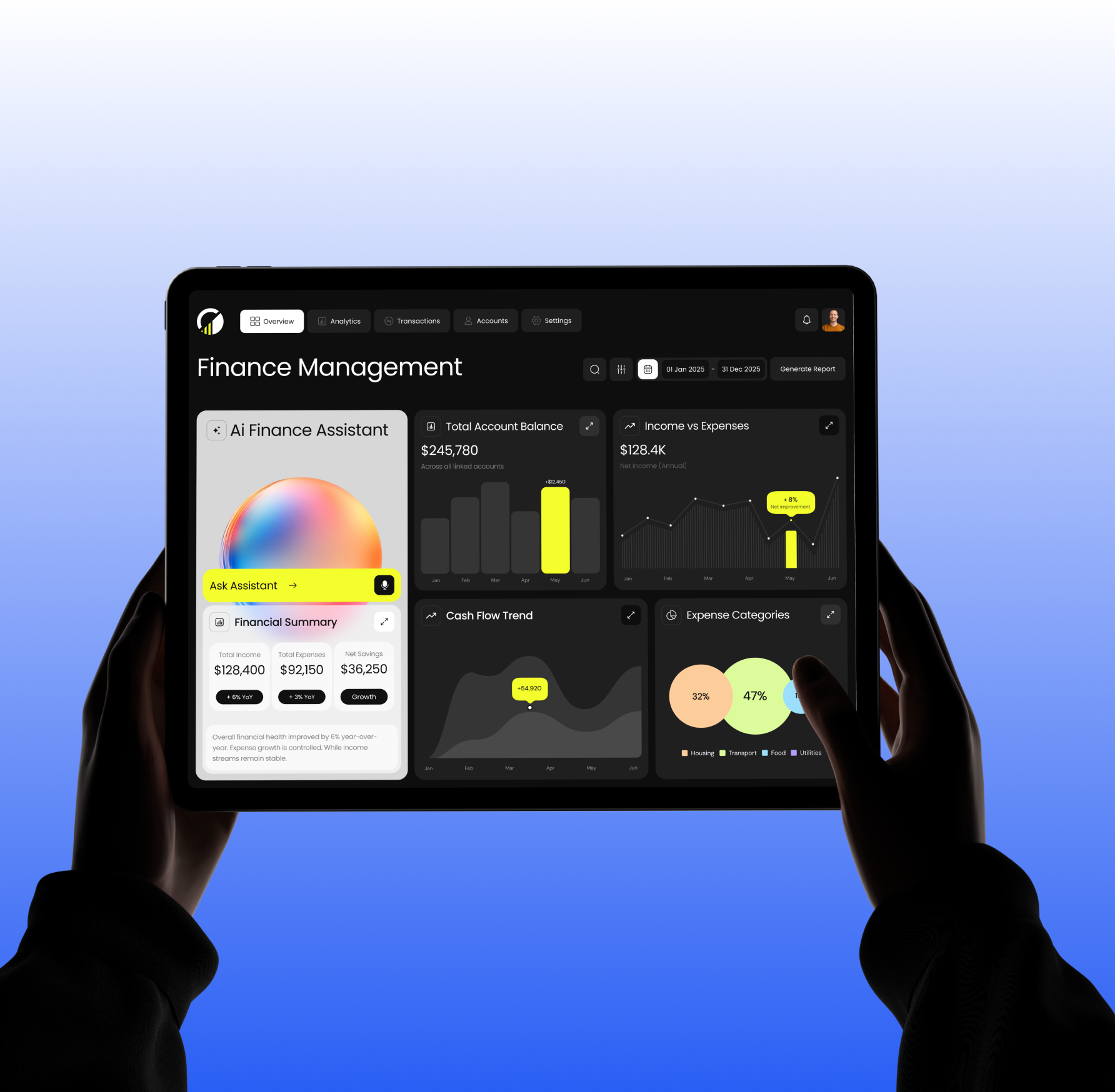
Product UI is the app your users log into every day. Onboarding flows, dashboards, settings, the core workflows people actually pay for. Its users are existing customers who might touch it two hundred times a year, so it lives or dies on activation rate, feature adoption, and churn. Getting it right means designing empty states, error states, and edge cases, then wrapping the whole thing in a design system your engineers can build against. This is the work a true SaaS product design agency leads with.
The marketing website is the site that sells the product. Homepage, pricing page, feature pages, the demo request form. Its visitors are prospects who see it once before they decide, so it is measured on trial signups, demo bookings, and conversion rate. The craft here is messaging, conversion patterns, and page speed, which is why a SaaS web design agency thinks about the first scroll, not the fortieth screen.
An agency that is excellent at one is often mediocre at the other, and the portfolios rarely tell you which. So before you ask anyone their price, ask which job they lead with.
| Dimension | Product UI | Marketing site |
| Who uses it | Existing customers | Prospects |
| Frequency | Daily | Once or twice |
| Success metric | Activation, churn | Trial signups |
| Typical cost | $20K–$120K | $15K–$50K |
| Timeline | 8–16 weeks | 6–12 weeks |
| Best partner | Product design agency | Conversion-focused agency |
The tell is simple. Send a vague brief and watch what comes back. The agency that quotes a homepage refresh when you asked about retention just told you which job it does. That is useful information, and it is free.
Do you actually need an agency?
Every listicle skips this question because the honest answer sometimes costs the author a sale. So here it is, with the trade-offs intact. This is also the real heart of the SaaS design agency vs freelancer debate, which is rarely just about price.
Freelancer ($50 to $150 per hour). Right when the scope is small and clearly defined and you can hold the quality bar yourself. Wrong when you need research, process, or a clean developer handoff, because a solo contractor rarely carries all three.
Design subscription ($2,000 to $6,000 per month). Right when you are pre-Series A with a steady stream of small requests and you value being able to pause in a slow month. Wrong when you need deep research or product strategy, because the model is built for throughput, not thinking. We see the same thing with this tier over and over. It is genuinely good for volume, and it is the wrong tool the moment the problem gets hard.
Agency, project or retainer. Right when a real product problem needs solving and you want a team that will push back on it. Wrong when you just need production work you could have briefed to a freelancer for a third of the cost.
In-house designer ($90K to $160K per year). Right once you are past roughly $50K MRR and design has become a daily need. Wrong when the work is bursty rather than continuous, because you will pay a salary to smooth out spikes that a retainer handles better.
The honest line under all four: if you cannot name the metric you want to move, no agency will fix that for you. That is a product strategy gap, and product strategy is not something you outsource to a design vendor. It is worth adding that AI tooling has quietly changed this calculation in 2026. If all you need is competent production, the build time that used to justify an agency has collapsed, and the value question is fair to ask out loud.
Match the agency to your stage
The right partner at seed stage is often the wrong partner at Series B, and the reverse is just as true. A B2B SaaS design agency that runs a heavy enterprise process will drown a pre-seed team, and a scrappy production shop will stall a company that needs governance.
| Stage | What you need | Wrong fit |
| Pre-seed / MVP | Speed, shipping, MVP-first thinking | Enterprise process |
| Seed | Core flows validated, first design system | Full rebrand |
| Series A | Metrics focus, activation and retention work | Cheap production shops |
| Series B+ | Systems, multi-team scale, governance | Boutique with no capacity |
Pre-seed and MVP. Good looks like a partner who ships a usable product fast and argues you out of features you do not need before you have product-market fit. Spend conservatively and protect runway. The common mistake is hiring an enterprise agency and paying for a discovery process you cannot act on yet.
Seed. Good means your core flows get validated with real users and you walk away with the first version of a design system. This is also the stage where mobile starts to matter for many products, and a partner who understands native patterns earns their fee; our mobile app design guide for startups covers what that work involves.
Series A. Good looks like a team fluent in activation and retention, one that ties design decisions to trial-to-paid conversion. The classic mistake here is hiring cheap production work when what you actually need is someone senior enough to challenge your product decisions. If you are hunting for the best SaaS design agency for startups at this stage, weight judgment over hourly rate.
Series B and beyond. Good means systems, capacity, and governance across multiple teams. The wrong fit is a two-person boutique that does lovely work but cannot staff the load.



Not sure which kind of design help you need?
Tell us what metric you are trying to move, and we will tell you honestly.
The 6 criteria that actually matter
Strip away the awards and the mood boards, and a strong SaaS UI/UX design agency clears six specific bars.
- A SaaS-specific portfolio. Not “beautiful work.” Actual SaaS products with dashboards, onboarding, and settings screens. General agencies design for everyone using the same template, and it shows the moment a real workflow gets complicated.
- Product reasoning, not screenshots. Can they explain why a screen looks the way it does? What did they cut, and why? An agency that can only narrate what it added is decorating, not designing.
- Metric literacy. Do they talk about activation, churn, and adoption, or only about visual quality? If nobody in the room mentions a number, they are optimizing for their portfolio, not your business.
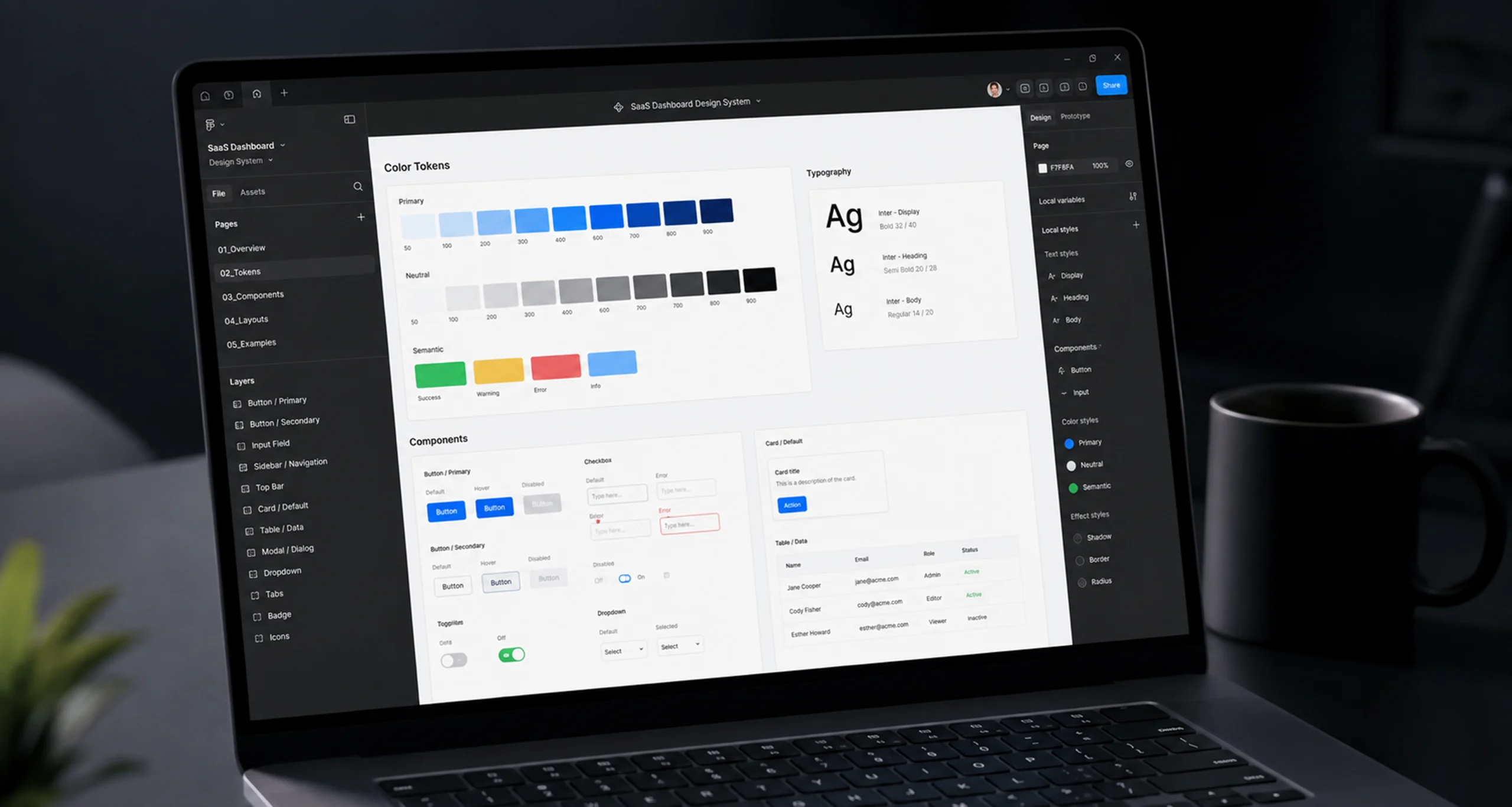
- Design-to-development handoff. Ask to see a real Figma handoff file. Component libraries, design tokens, responsive specs. This is the deliverable that decides if your engineers build what was designed. The most expensive failure in this category is exactly this, beautiful mockups the dev team could not build, so treat handoff quality as a pass-or-fail gate, not a nice-to-have.
- Willingness to push back. An agency that says yes to everything is a production shop wearing a strategy label. You are paying partly for someone with the standing to tell you no.
- Verifiable proof. Clutch reviews, named clients, live products you can click through. Concept work with no client attached is a portfolio filler, not a credential.
Engagement models compared
The model an agency offers tells you how it works, so read the SaaS design agency pricing models as signals, not just numbers.
| Model | Cost | Best for | Trade-off |
| Subscription | $2,000–$6,000/mo | Pre-Series A, steady small work | Limited deep research |
| Project-based | $15,000–$200,000+ | Defined scope, one big push | Scope changes cost extra |
| Retainer | $5,000–$20,000/mo | Continuous iteration post-launch | You pay in slow months too |
| Discovery + build | $5,000–$15,000, then full quote | Complex products, unclear scope | You pay before the real work starts |
A paid discovery phase reads as a warning to some founders and reassurance to others. Read it the second way. An agency that insists on a short paid discovery before quoting the build is usually one that refuses to put a number on work it has not scoped yet, which is a healthier instinct than a confident quote based on a one-line brief.
How to read a SaaS portfolio
Most founders look at a portfolio and ask one question: does it look good? That is the wrong question, and it is the reason the market feels so hard to tell apart. Here is what to look at instead.
- Does the portfolio show dashboards, or only landing pages? Landing pages only means you are looking at a marketing agency wearing a product-design label.
- Are there empty states, error states, and edge cases? Their absence means they designed the demo, not the product. Real SaaS lives in the states nobody screenshots.
- Is there a case study with a before and after, and a number attached? A story without a metric is a mood piece.
- Do they explain what they removed? Good SaaS design is usually subtraction. An agency that only talks about what it added is decorating a page, not improving a product.
- Can you click through to a live product? Concept work in a portfolio is a warning sign, not a credential. If it never shipped, you do not know it works.
Run those five checks and half the shortlist falls away, which is the point.
Before you judge a portfolio, look at what good already looks like. Our roundup of SaaS website examples sorts fifteen live sites by how they sell.
Questions to ask, and red flags
Once you are talking to real candidates, these seven questions do most of the filtering. For a deeper version of this conversation, our guide on how to choose a UI/UX design agency for your product goes further.
- Which do you lead with, product UI or marketing sites?
- Show me a dashboard you designed. Who was the client?
- What metric moved after that project?
- How do you handle developer handoff?
- What did you tell a client they should not build?
- Who exactly works on my project, and what is their seniority?
- What happens if scope changes mid-project?
And the five red flags that should end the conversation:
- They quote a price before understanding your product.
- The portfolio has no SaaS products, only websites.
- They cannot name a single metric from past work.
- They say yes to every request without pushback.
- They describe no design system or handoff process.
Any one of these on its own is a yellow flag. Two together, and you have your answer.
What it costs
Founders ask “how much does SaaS design cost” expecting one number, and there isn’t one, because the two jobs and four models pull the figure around. Here are honest ranges for design work, and note that development is a separate budget.
| Scope | Cost | Timeline |
| MVP product UI | $20,000–$50,000 | 8–12 weeks |
| Full product redesign | $50,000–$120,000 | 12–24 weeks |
| SaaS marketing site | $15,000–$50,000 | 6–12 weeks |
| Design system | $15,000–$40,000 | 6–10 weeks |
| Monthly subscription | $2,000–$6,000/mo | Ongoing |
If those numbers look wide, that is the reality of a SaaS design agency cost, and it is why the price-first quote is a red flag: nobody can name your number before they understand your product. For how these figures sit next to broader web work, see what to expect from web design agency pricing in 2026. For the record, these are typical market ranges for SaaS design engagements, not figures we invented to sound expensive. Ask three agencies for a quote and you will see the same spread.
Ready to fix what your product is losing users to?
Pixelean designs SaaS products for startups and scaling teams around the world, from onboarding flows to developer-ready handoff.
How pixelean works
Full disclosure, since we opened by warning you about self-serving lists: Pixelean is a SaaS design agency, so read this section as disclosure, not a ranking.
We lead with product UI, and we also build marketing sites, which means we are candid about which job a project actually is before we quote it. We run discovery first on complex products, because a confident quote on a vague brief helps no one. Every project ships with a developer-ready Figma handoff, because we have watched too many good designs die in the gap between design and code. And we will tell you when your problem is not a design problem, because saying yes to that work would waste your money and our reputation. You can see the full scope on our SaaS application design page.
Frequently asked questions
What does a SaaS design agency do?
A SaaS design agency specializes in designing software products sold on subscription. The work usually covers two distinct areas: the product interface that existing users work in daily, and the marketing website that converts prospects into trials. Strong SaaS agencies understand onboarding flows, activation metrics, feature adoption, and churn, not just visual design.
How much does a SaaS design agency cost?
MVP product UI design typically runs $20,000 to $50,000. A full product redesign runs $50,000 to $120,000. A SaaS marketing website runs $15,000 to $50,000. Monthly subscription models range from $2,000 to $6,000. These are design costs only, and development is a separate budget.
What is the difference between a SaaS design agency and a general design agency?
A general agency designs for many industries using the same framework. A SaaS design agency understands subscription business models, activation and retention metrics, onboarding patterns, and the difference between product UI and marketing sites. That domain knowledge is the difference between a design that looks good and a design that moves a metric.
Should I hire a SaaS design agency or an in-house designer?
Hire in-house once you are past roughly $50,000 MRR and your design needs are daily rather than bursty. An in-house designer iterates faster once onboarded but cannot match the range of an agency team. Agencies work better for concentrated pushes: a redesign, an MVP, or a design system build.
How long does a SaaS design project take?
An MVP product design takes 8 to 12 weeks. A full product redesign takes 12 to 24 weeks. A marketing website takes 6 to 12 weeks. Enterprise platforms can run 6 to 12 months. Rushing the discovery phase rarely saves time, because unvalidated assumptions surface later as rework.
What should I look for in a SaaS design portfolio?
Look for actual SaaS products with dashboards, onboarding flows, and settings screens, not just landing pages. Check for empty states, error states, and edge cases, since their absence suggests the agency designed a demo rather than a product. Ask for a case study with a business problem, a specific change, and a measurable result.