Your champion liked the demo, so they forwarded your link to someone in finance who has never heard of you. That person skipped the homepage, opened the About page, and gave it a quick look to answer one question. Is this a real company we can trust with a contract?
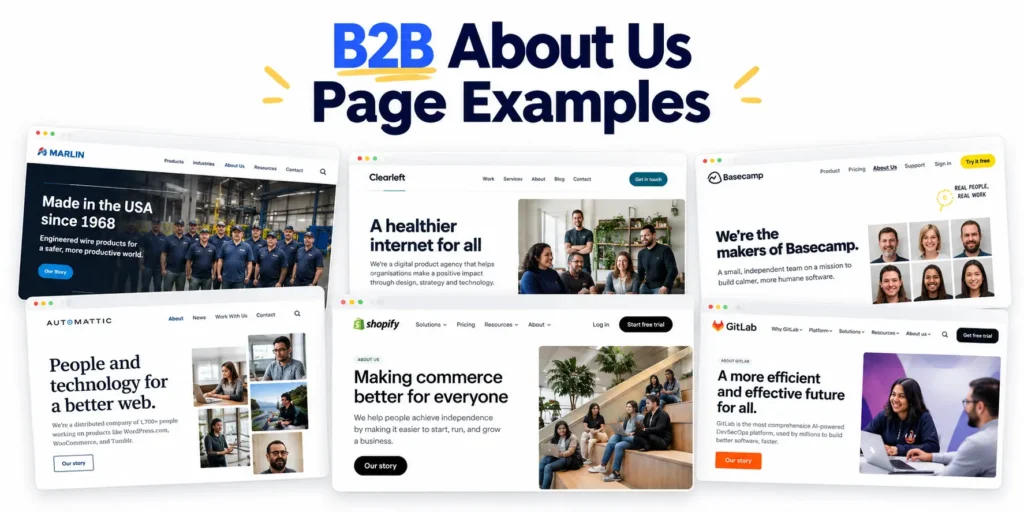
A B2B About page is read after the homepage has done its job, by someone deciding if they can trust you. It rarely wins the deal, but a weak one can quietly end it. This post gives you 12 B2B About Us page examples, ten About pages and two homepage sections, each checked live on 14 October 2026 and sorted by the question it answers, plus a guide to the about section on your homepage and a ten-line checklist.
Key takeaways
- A B2B About page answers five questions a buyer will not ask out loud.
- Small companies win here with names, faces, an address and a process. A long history is optional.
- The about section on the homepage is a summary with one link, and it should not copy the full page.
- Every claim on an About page should be something a reader can check.
Who opens a B2B about page, and why
The About page is read by people who were not in the first meeting.
Gartner describes B2B buying groups “ranging from five to 16 people across as many as four functions” (Gartner press release, 7 May 2025). Several of them will open your About page, each for a different reason.
The researcher. They found you and want to know if you are worth a first call, so they check who you serve.
The budget holder. They are about to commit money for a year or more, so they check who owns you and how long you have been around.
Procurement. They need a legal name, an address and a contact before they can add you as a vendor, and the About page is the natural place to look.
A new hire on the buyer’s side. They will work with your team and want to see the people.
An investor or partner. They check the founders, the funding and where the company is heading.
April Dunford separates value from objection handling. Value is why a customer picks you, and objection handling covers what they need before they can say yes. An About page sits almost entirely in the second group, which is why it is easy to neglect and costly to get wrong. For the full map of who checks which page, see our guide to B2B website design best practices.
The five questions a B2B about page has to answer
| The question | What answers it | What fails it |
| Are you a real company? | Legal name, address, founding year, real photos | Stock photos and no address |
| Who will we actually work with? | Named people, photos, roles, a way to reach them | A team page of executives only |
| Will you still be here next year? | Ownership and funding stated, counts the reader can check | Large counts with nothing to click |
| Why do you exist, and who is it for? | A short founder note and a plain line on who you serve | A mission statement that fits any company |
| How do you work? | A process, values that change behavior, a public handbook | Values that are only adjectives |
Smaller companies supply eight of the 12 pages, from seven firms with a team under 50 people or a name few buyers outside their industry would recognize. Three are service firms and one is a manufacturer.
Are you a real company?
A buyer who does not know you looks for proof that the company exists offline, so give them a legal name, a street address, a founding year and photos of real people or places. Procurement cannot add a vendor without the first two, and the budget holder reads the founding year as a rough guide to risk.
Marlin Steel
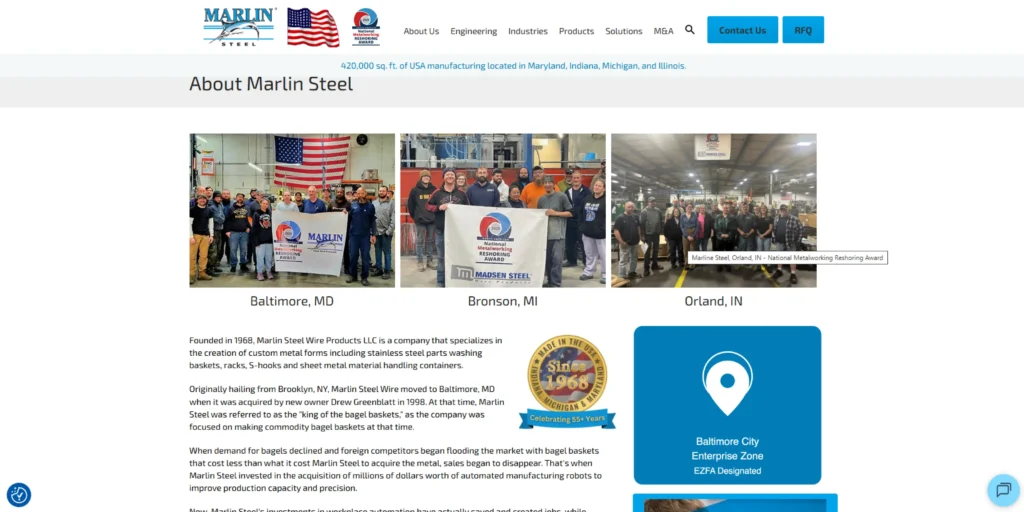
The question. Are you a real company?
What the page does. The Marlin Steel About page opens with a banner claiming 420,000 square feet of US manufacturing and shows a team photo from each of its three plants, in Baltimore MD, Bronson MI and Orland IN. It says the company was founded in 1968, moved from Brooklyn to Baltimore in 1998 under owner Drew Greenblatt, and shifted from bagel baskets to engineered wire parts. A factory video plays on the page, and the menu links to its ISO 9001 and ISO 13485 certifications.
Copy this. The history explains a change of direction, so a buyer learns why the company makes what it makes today.
Leave this. Links to national news coverage sit high in the menu, above the facts a buyer came for.
Checked. 14 October 2026.
Clearleft
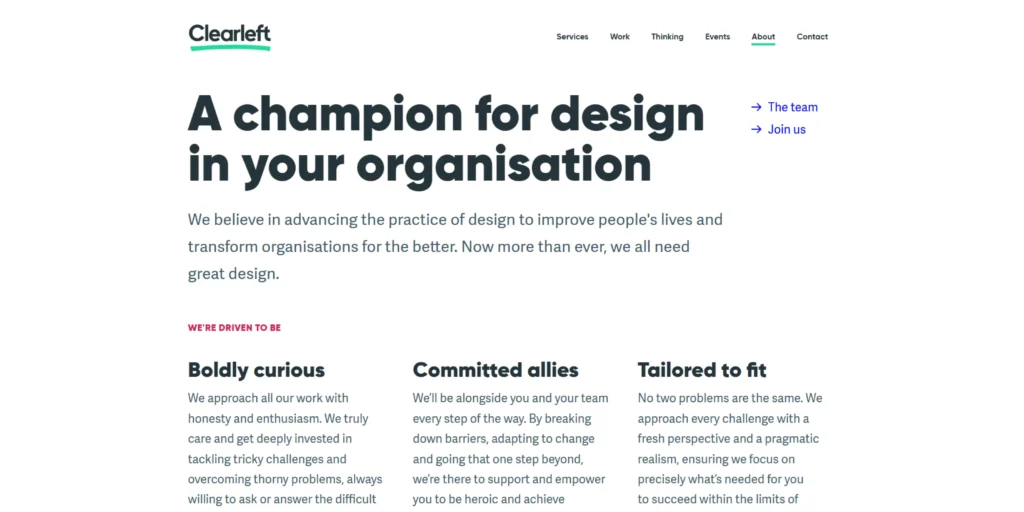
The question. Are you a real company?
What the page does. The Clearleft About page shows photos of its studio in Brighton, England, and the footer gives a full address, 68 Middle Street, Brighton BN1 1AL, with the legal name Clearleft Ltd and an email. It says the firm has worked for 20 years with clients such as the BBC and the Natural History Museum. Three named staff members appear with what each is working on right now.
Copy this. Put the address and legal name on the page, because procurement needs both and a service firm with a studio photo reads as a place you could visit.
Leave this. Values such as “Boldly curious” and “Committed allies” could belong to any agency.
Checked. 14 October 2026.
Who will we actually work with?
A B2B About page should show the people who will do the work, including the delivery team below the founders. Give names, real photos, roles and a way to reach them.
PostHog
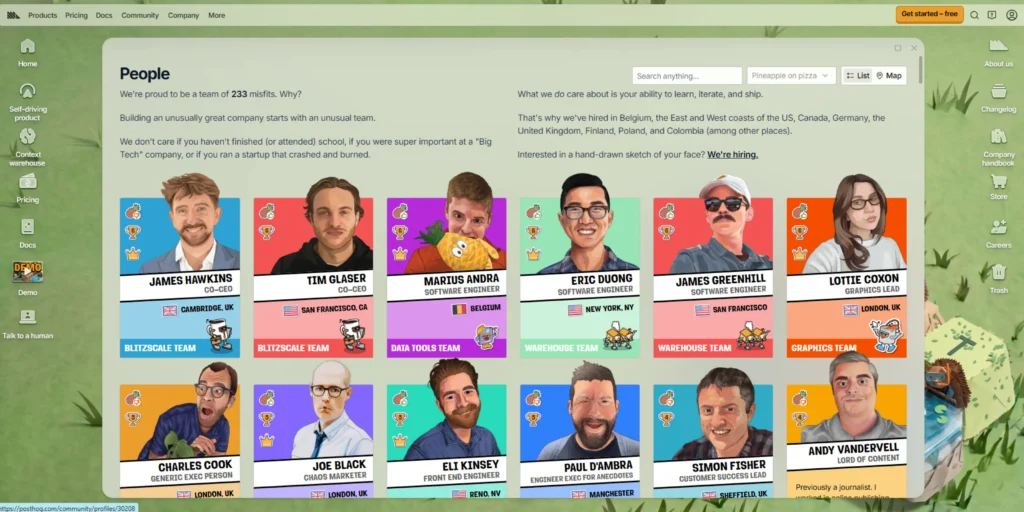
The question. Who will we actually work with?
What the page does. The PostHog team page opens with “We’re proud to be a team of 235 misfits.” Each card carries a hand-drawn portrait, a name, a role, a country flag and the product team the person belongs to.
Copy this. The team name on each card. A buyer can see who owns the part of the product they will use.
Leave this. At 235 people, a full grid is long. A company with five people can show the same detail in one row.
Checked. 14 October 2026.
Sparkbox
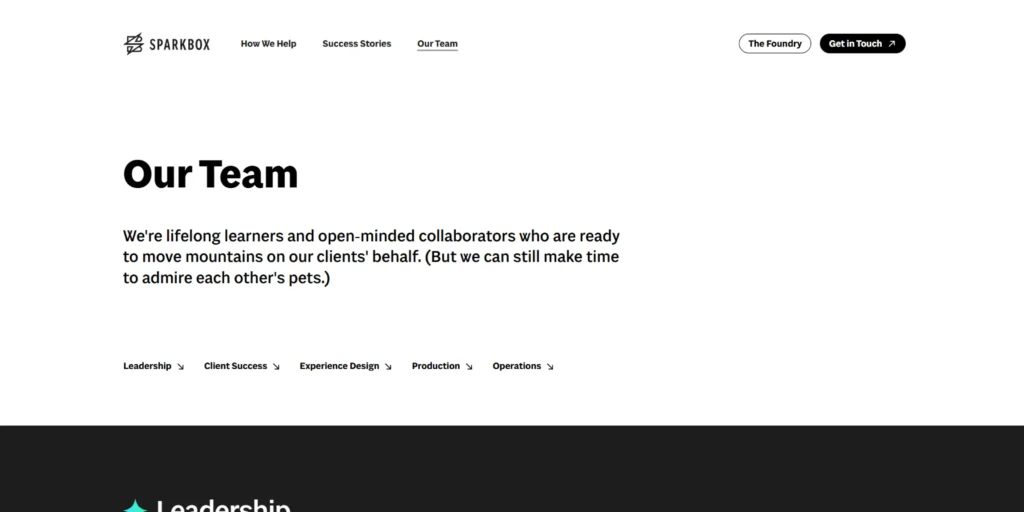
The question. Who will we actually work with?
What the page does. Sparkbox, a design systems firm, sends its About link to an Our Team page. People are grouped by function, from Leadership and Client Success to Experience Design, Production and Operations. Designers, developers, project managers and finance staff are named, most with a LinkedIn or GitHub link.
Copy this. Group the team the way a project is staffed. A client can see the project manager and the developers they will meet.
Leave this. Only the two founders get a written bio. A line on each delivery lead would answer the buyer’s next question.
Checked. 14 October 2026.
Will you still be here next year?
A buyer signing a contract for a year wants to know you will last. State who owns the company, how it is funded and if it makes money, and make the numbers checkable. A venture-funded company can answer this too, by naming its investors and its last round. The answer that fails is silence, because the budget holder fills the gap with the worst case.
Ghost
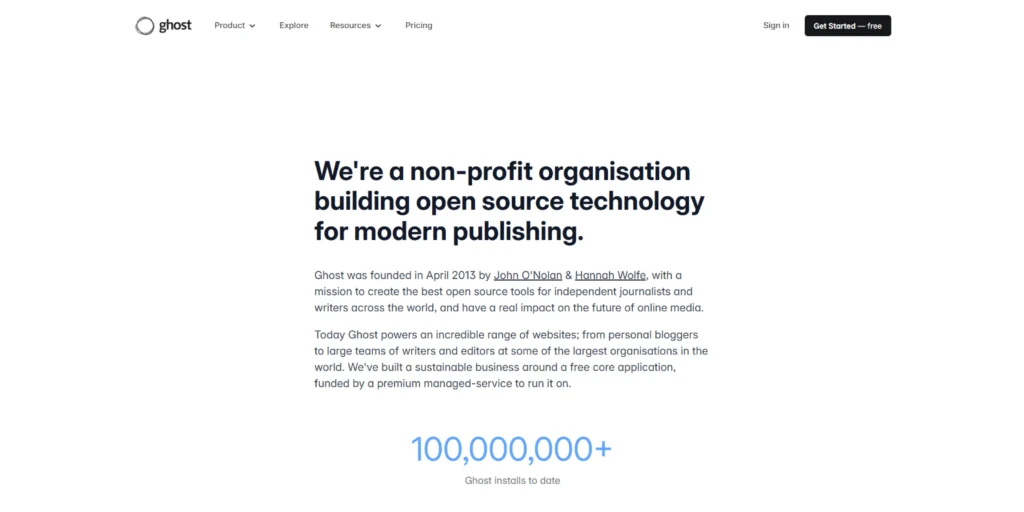
The question. Will you still be here next year?
What the page does. The Ghost About page says Ghost was founded in April 2013 and is run as a non-profit foundation whose constitution means it “can never be bought or sold,” and it shows a live feed of company metrics. On 14 October 2026, the feed showed an annual run rate of $11,132,578 and 30,547 active customers.
Copy this. The live numbers. A buyer does not have to trust a claim, because the figure updates in front of them. Few companies will publish revenue, but any company can say who owns it.
Checked. 14 October 2026.
Plausible
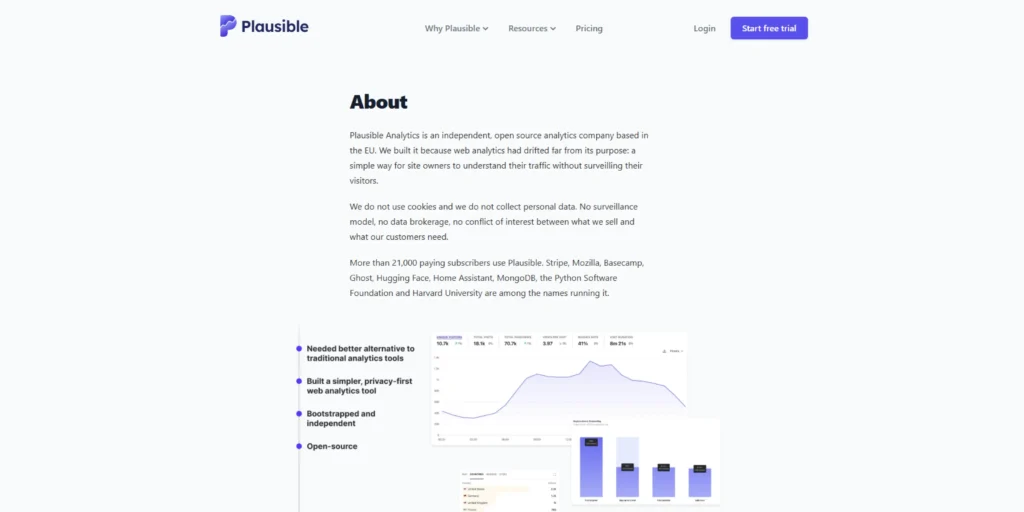
The question. Will you still be here next year?
What the page does. The Plausible About page has a section titled “How we’re funded.” It says Plausible is “self-funded and profitable, with no outside investors and no plans to sell.” The story names the founder, Uku Taht, gives the start date as December 2018, says annual recurring revenue passed $1 million in 2022, and states a team of 10. The footer links to procurement, security and data processing pages.
Copy this. A funding section with its own heading, which the budget holder can find in seconds.
Leave this. “More than 21,000 paying subscribers” has nothing to click, and Ghost shows how to make a number like that checkable.
Checked. 14 October 2026.
Why do you exist, and who is it for?
A buyer wants a reason the company exists and a sign it is built for companies like theirs. A short founder note and a plain line on who you serve both work. A mission statement that could hang in any office does not.
Basecamp
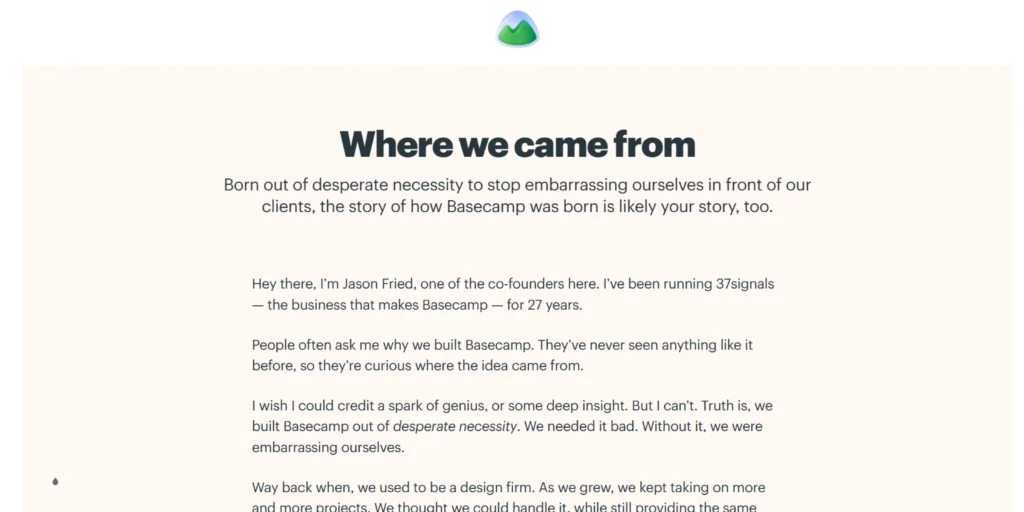
The question. Why do you exist?
What the page does. The Basecamp About page is a letter from co-founder Jason Fried. He explains that the company was a design firm that kept dropping work for clients, built its own project tool, and found clients asking to use it. The letter ends with his email address.
Copy this. The founder’s direct email, which tells a buyer that someone senior will answer.
Checked. 14 October 2026.
Transistor.fm
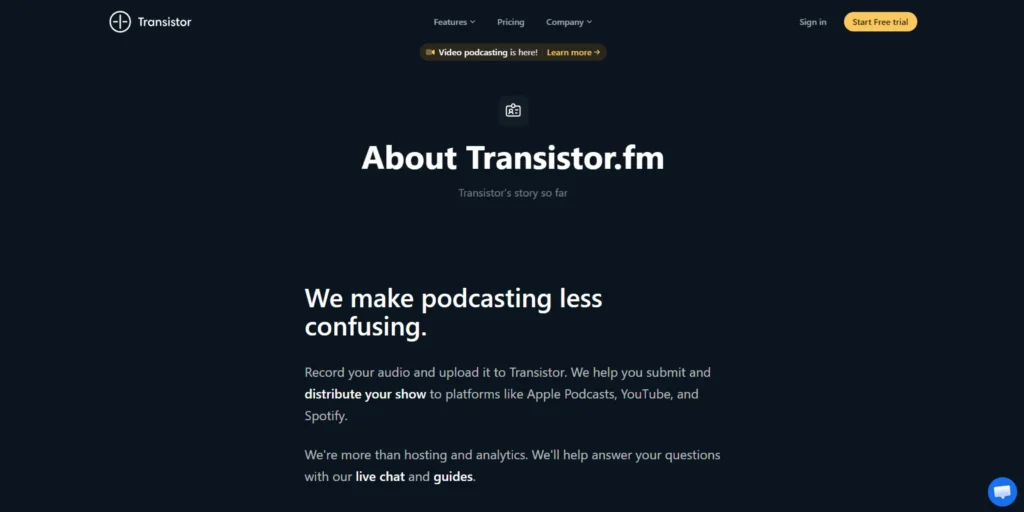
The question. Who is it for?
What the page does. The Transistor About page opens with “We make podcasting less confusing” and names both co-founders, Jon Buda and Justin Jackson. It says they met in 2014, signed a partnership in February 2018 and recorded a weekly podcast about building the company. It states a team of five and “over 30,000 podcasts.”
Copy this. The one-line purpose before the story, because the reader knows what the company does before learning how it started.
Leave this. The phrase “small (but mighty),” because the team size already makes the point.
Checked. 14 October 2026.
How do you work?
A buyer wants to know what working with you looks like before the contract. Publish the process, and write values as things you do. For a model of the stages to describe, see our walk-through of how a design project runs.
GitLab
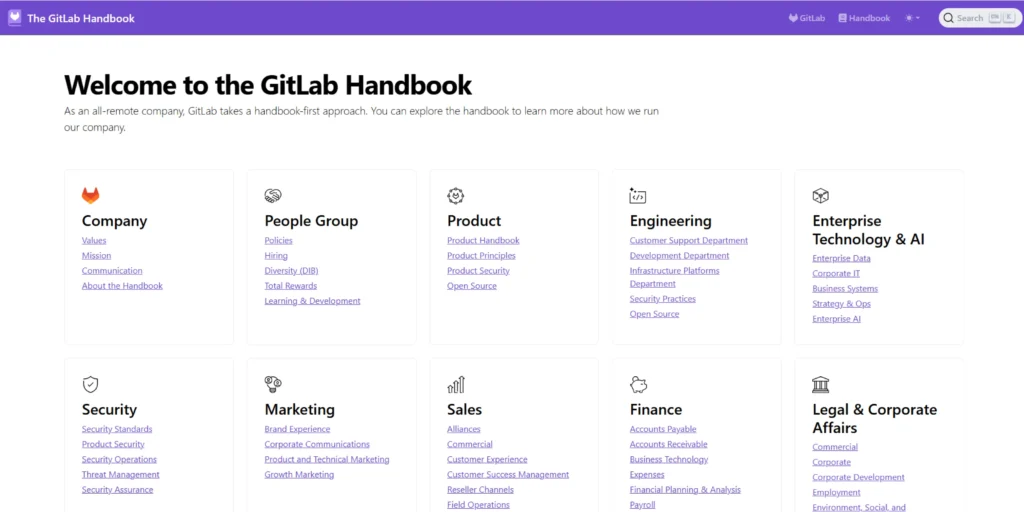
The question. How do you work?
What the page does. GitLab’s best About content lives in its handbook. The GitLab Handbook opens with “As an all-remote company, GitLab takes a handbook-first approach.” It is public and organized by department.
Copy this. A public handbook answers the small questions a buyer would otherwise ask in a call.
Leave this. The scale, since GitLab’s handbook covers a public company and a small firm needs one page on how a project runs.
Checked. 14 October 2026.
Focus Lab
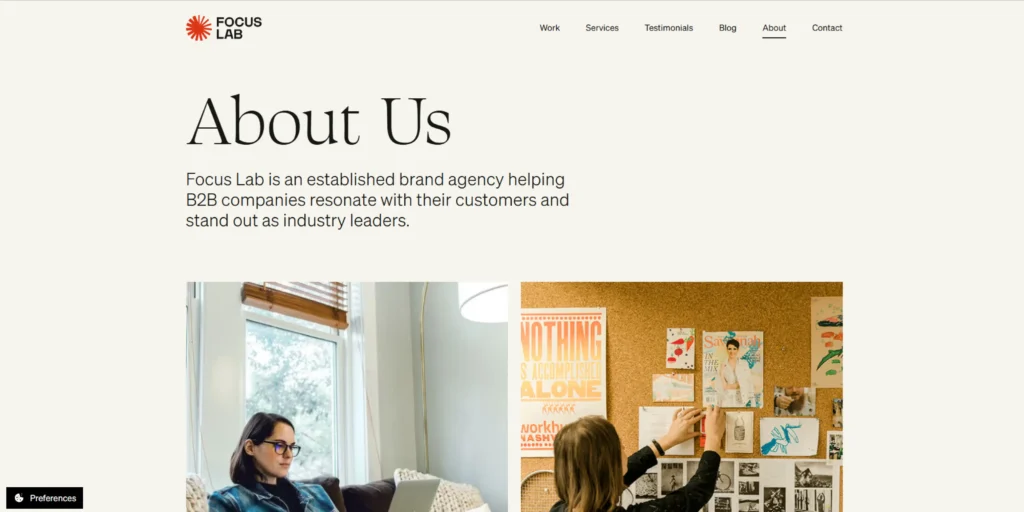
The question. How do you work?
What the page does. The Focus Lab About page says the agency helps “B2B companies” and writes its values as behavior. One line reads “We don’t silo. We don’t hoard context.” The services page adds the rhythm, with weekly deliverables, one round of unified client feedback each week, and typical durations of one to three months or three to five months.
Copy this. Values that describe what you will or will not do, which a buyer can test in the first week.
Leave this. The weekly process lives on the services page. One sentence and a link on the About page would put it in front of the budget holder.
Checked. 14 October 2026.
The B2B about us section on your homepage
An about section on the homepage is three to five lines that answer “who are you” and link to the full page. The best B2B about us section examples for your homepage say who you serve, give one proof point the reader can check, name the people or the founder, and end with one link.
The full About page holds the history, the values and the team grid, so leave those out of the homepage section.
Plausible homepage
What the page does. Halfway down the Plausible homepage, above the pricing, a short letter from co-founders Uku and Marko ends with one paragraph that begins “P.S.” It says the company is independent, self-funded, bootstrapped and profitable, a team of 10 running since 2018, with no outside investors. It closes with a link to “about us.”
Copy this. The format. One short paragraph and one link, placed where a reader who is still scrolling will find it.
Leave this. It lists five similar claims in a row. Two would carry the same weight.
Checked. 14 October 2026.
Fathom Analytics homepage
What the page does. The Fathom homepage carries a short letter that includes the line “Our customers come first because they’re our only investors.” It says Fathom has no venture capital, bank loans or other shareholders, and it is signed by founder Jack Ellis.
Copy this. One sentence that turns ownership into a reason for the buyer to care.
Leave this. The block runs to six paragraphs, which is a full About page on the homepage. And the Fathom About page lists “Thousands” of paying customers and “Billions” of pageviews. Round words like those give the reader nothing to check.
Checked. 14 October 2026.


Which buyer is your website losing?
Send us your URL. We’ll check it against all five roles and tell you where the deal stalls.
If you are small or new
A small company can pass every check on this list, because each one asks for proof a reader can follow, and a famous logo is only one kind of proof.
The pillar guide covers trust without famous logos for the whole site. On the About page, that becomes six things.
A real address. Or a clear line on where the team works, such as “fully remote, across three time zones.” Our own About page gives both addresses, the team’s office in Dhaka and the company’s registered address in Albuquerque.
Named people with photos. Put the founder in the first screen.
The process, week by week. What happens in week one, two and three.
Prices or a starting figure, linked. See how others handle it in our post on SaaS pricing page design.
Reviews linked from Clutch or G2. Link the live profile, because a screenshot can be edited.
What you will not do. One sentence, such as “We do not write backend code.”
Leave out. Borrowed logos, stock photos and unlinked counts. A stock photo hides the team, and a count nobody can click reads as a guess.
For larger SaaS examples, our list of SaaS website examples covers the homepages of bigger companies.
A checklist for your own About page
Answer yes or no. Every “no” is a question your buyer will ask somewhere else.
- Does the page give your legal company name?
- Does it give a street address or say where the team works?
- Does it state the year you started?
- Are the photos of your real people or places?
- Can a buyer see the people who will do the work, by name?
- Does it say who owns the company and how it is funded?
- Can the reader click through to check every number on the page?
- Does one plain sentence say who you serve?
- Does it describe how a project or onboarding runs?
- Does the about section on your homepage stay at five lines or fewer and link here?
Frequently asked questions
What should a B2B About Us page include?
A company about page for a B2B buyer needs a legal name and address, the year you started, named people with photos, who owns and funds the company, who you serve, and how you work. Each item answers a question a buyer, a budget holder or procurement brings to the page. Link every number to something the reader can check.
How long should an About Us page be?
Long enough to answer the five buyer questions and no longer. Ghost and Plausible each answer several of them on one page, under short headings. What matters is how fast a reader can find each answer.
Should the About page include pricing?
The About page does not need a price table. It helps to link a starting figure or your pricing page. A budget holder checking you out will want the price next, so one link saves them a search.
What goes in the about section of a homepage?
Three to five lines. Say who you serve, give one proof point the reader can check, name the founder or the people, and link to the full About page. Leave the history, values and team grid for the About page itself.
How do you write an About page with no well-known clients?
Show proof a reader can check. Give your address, named people with photos, your process week by week, a starting price and linked reviews on Clutch or G2. Say what you will not do. These carry more weight with a careful buyer than borrowed logos or round numbers.
The bottom line
The About page is where a buyer checks three things before a contract. Are you a real company, who will they work with, and will you still be around next year? Ghost answers with a live revenue feed. Clearleft answers with a street address, and Sparkbox with the names of its developers. None of those needs a famous client. Go through the five questions, find the one your page leaves open, and fix that first. Our rule is simple. Every number on an About page gets a link the reader can follow.
Send us your About page. We will list which of the five questions it leaves unanswered. The team replies within 24 hours.
Sources
All pages read on 14 October 2026.
- Gartner, press release, 7 May 2025.
- April Dunford, “Value vs. Objection Handling“.
- Marlin Steel, about.
- Clearleft, about.
- PostHog, people.
- Sparkbox, our team.
- Ghost, about.
- Plausible, about.
- Plausible, homepage.
- Basecamp, about.
- Transistor.fm, about.
- GitLab handbook.
- Focus Lab, about.
- Focus Lab, services.
- Fathom Analytics, homepage.
- Fathom Analytics, about.